Why You’re Not Getting Candidates From Recruitment Agencies
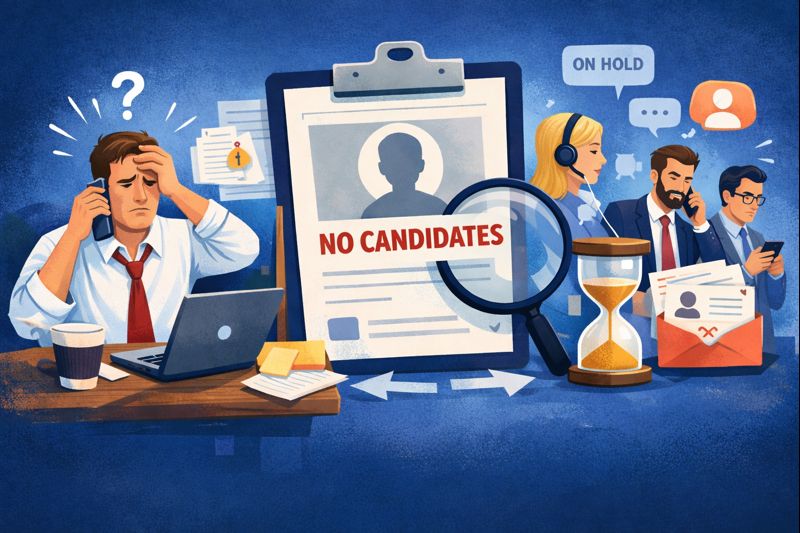
You’ve briefed the recruiter. You’ve had the call. You’ve answered follow-up questions. And then – nothing.
No candidates. No feedback. No progress.
If this sounds familiar, you’re not alone. Many companies struggle to get results from recruitment agencies – even in urgent hiring situations. But the issue often isn’t a lack of candidates. It’s the way agency recruiting is structured:
1. Recruiters Don’t Know Where to Focus
Recruitment agencies work with multiple clients at the same time. When roles are unclear, timelines are vague, or communication is scattered, recruiters naturally prioritize vacancies that are easiest to fill.
If your role isn’t clearly positioned – or feels uncertain – it often drops down the priority list.
2. Too Many Agencies, Too Little Commitment
Working with multiple recruitment agencies can seem like the fastest way to fill a role. In reality, it often creates the opposite effect.
When agencies know they’re competing blindly:
-
Commitment drops
-
Candidate quality suffers
-
Communication becomes transactional
The result? Everyone waits for someone else to deliver.
3. Briefings Are Incomplete or Inconsistent
Small differences in how a vacancy is explained can lead to vastly different candidate interpretations. When agencies receive slightly different information, results become unpredictable.
Consistency is key – but difficult to maintain across multiple recruiter conversations.
4. There’s No Transparency on Progress
Companies often have little visibility into what happens after a role is shared with recruitment agencies. Without clear feedback on outreach activity, candidate responses, or prioritization, it’s difficult to understand why results are missing or where the process is breaking down.
This lack of transparency makes it harder to adjust expectations, refine the role, or decide whether additional agencies are needed. As a result, hiring slows down and collaboration becomes inefficient.
5. The Process Is Outdated
Traditional agency recruiting relies heavily on calls, emails, and manual coordination. In a fast-moving market, this slows everything down.
Modern hiring requires:
-
Clear structure
-
Centralized communication
-
Outcome-driven collaboration
A Smarter Way Forward
If recruitment agencies aren’t delivering candidates, it’s rarely due to a lack of talent. More often, it’s a structural issue in how collaboration is set up. Instead of relying on unstructured outreach and scattered communication, companies can benefit from a more focused, outcome-driven approach to agency recruiting. By centralizing access to multiple vetted recruitment agencies and sharing clear, consistent job information upfront, recruiters can prioritize roles more effectively and reduce wasted effort.
Standardized briefings and defined expectations make it easier to track progress, compare candidate submissions, and identify any gaps quickly. This structured approach not only leads to higher-quality candidate matches and faster hiring decisions, but also creates a more transparent, collaborative process – reducing frustration for both companies and recruiters alike.