The Hidden Cost of Talking to Too Many Recruiters
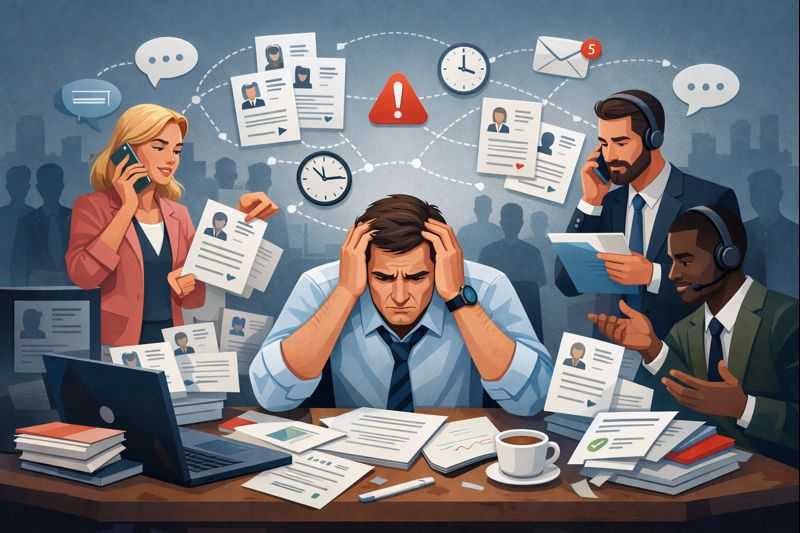
At first glance, working with multiple recruitment agencies seems like the fastest way to fill an open position. After all, more recruiters should mean more candidates, right?
In reality, many companies experience the opposite. Instead of speed and choice, they face confusion, duplicated effort, and long hiring cycles. If working with multiple recruitment agencies feels frustrating rather than effective, you’re not alone – and there’s a reason for it.
Why Companies Work With Multiple Recruitment Agencies
Most companies don’t set out to overcomplicate their hiring process. They turn to multiple recruiters because they want faster results, broader reach, and better candidate options. In competitive markets, spreading a vacancy across several agencies feels like a safe bet.
Unfortunately, this approach often introduces hidden inefficiencies that outweigh the intended benefits.
The Hidden Costs of Working With Multiple Recruitment Agencies
Reduced Prioritization by Recruiters
When recruiters know they are one of many agencies working on the same role, their motivation naturally drops. Vacancies lose urgency, and recruiters focus their energy on roles where they have a higher chance of success.
Inconsistent Candidate Quality
Different agencies interpret the same job description differently. The result is a mix of profiles that vary widely in quality, relevance, and expectations – making comparisons difficult and slowing decision-making.
Communication Overload
Managing calls, emails, follow-ups, and feedback with multiple recruitment agencies quickly becomes time-consuming. Important details get lost, responses are delayed, and the hiring team spends more time coordinating than evaluating candidates.
Lack of Transparency and Accountability
When many recruiters are involved, it’s hard to see who is actively working on the role – and who isn’t. Without transparency, companies struggle to understand why candidates aren’t coming in or where the process is breaking down.
Damage to Employer Branding
Candidates often get contacted by multiple recruiters about the same role. This creates confusion, mixed messaging, and can reflect poorly on the hiring company – especially in candidate-driven markets.
Too Many Cooks Spoil The Broth
Working with multiple recruitment agencies spreads attention thin – on both sides. Recruiters compete instead of collaborating, while companies spend valuable time managing complexity instead of focusing on hiring outcomes.
What feels like flexibility often turns into friction.
The Real Fix Isn’t Fewer Agencies – It’s Better Coordination
Instead of managing numerous recruiters individually, companies benefit from a more focused and structured approach to agency collaboration. Clear structure helps recruiters understand priorities, reduces duplicated effort, and creates accountability on both sides. When job information, communication, and submissions are organized centrally, hiring teams gain better visibility and can make faster, more confident decisions. In the end, structure turns recruiter volume into measurable results (rather than ongoing coordination overhead).
This does not mean that working with multiple recruitment agencies is inherently wrong, but unmanaged volume comes at a cost. Companies that simplify recruiter collaboration, improve transparency, and focus on outcomes over quantity consistently see better hiring results with less effort.